12 Best Side Hustles for College Students in 2026
Looking to earn extra money while studying? These side hustles are perfect for busy students who want to build income without sacrificing grades.
Discover the best apps, side hustles, study hacks, and success stories to help you thrive at uni and build something amazing.
Join 2,000+ students. Free weekly digest. No spam.
Fresh insights for ambitious students
Looking to earn extra money while studying? These side hustles are perfect for busy students who want to build income without sacrificing grades.
Notion is the ultimate student productivity tool. Here's how to set it up with templates that actually work for university life.
Meet Sarah Chen, a final-year computer science student who built a mental health app that attracted major investors — all while maintaining a first-class degree.
Apps and resources to level up your uni experience
The all-in-one workspace for notes, tasks, databases, and collaboration. Free for students with the Education plan.
Design presentations, posters, social media graphics, and more with professional templates. Essential for any student project.
Start your business from anywhere. Stripe Atlas helps you incorporate a company, open a bank account, and start accepting payments.
Real students building real businesses

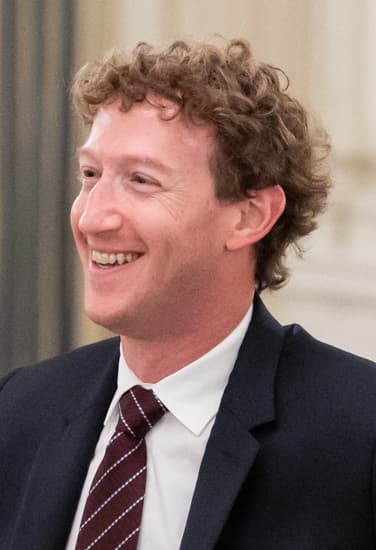
Mark Zuckerberg
Harvard University
How a sophomore's social directory project became Facebook, the platform that connected billions and redefined the internet.
Ben Francis
Aston University, Birmingham
How a 19-year-old Aston University student built Gymshark from his parents' garage into a global fitness brand worth over £1 billion.
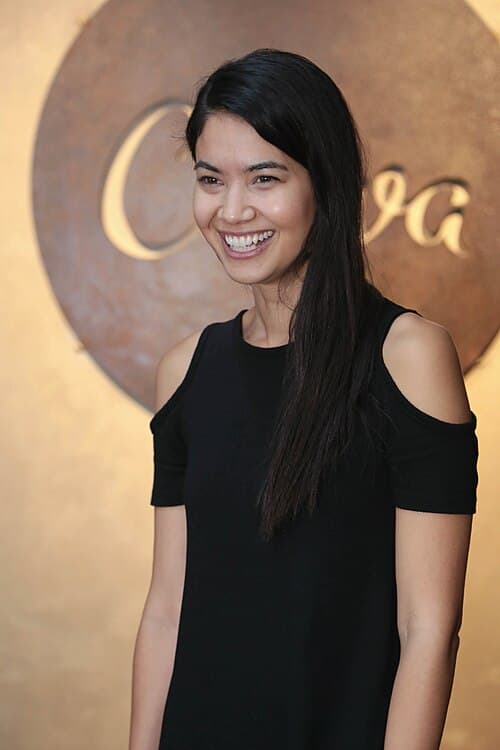
Melanie Perkins
University of Western Australia
A 19-year-old design tutor in Perth saw that tools like Photoshop were needlessly complex. She built Canva — now used by 170 million people.
Brian Chesky
Rhode Island School of Design
Two design school graduates couldn't pay rent, so they bought air mattresses and rented them out. That side hustle became Airbnb.
Jamal Edwards MBE
West London / ACM
At 15, Jamal Edwards started filming rappers in his neighbourhood. SBTV launched the careers of Ed Sheeran, Dave, and Jessie J.
Fraser Doherty MBE
University of Strathclyde
Fraser Doherty made jam from his grandmother's recipes at 14 and became the youngest-ever supplier to a major UK supermarket.
Alexandr Wang
MIT
Alexandr Wang saw that AI's biggest bottleneck wasn't algorithms — it was data. Scale AI is now worth $7.3 billion.
Ritesh Agarwal
Thiel Fellowship
At 19, Ritesh Agarwal founded OYO Rooms. Backed by SoftBank, it grew to 1 million rooms across 80 countries.
Alexis Ohanian
University of Virginia
Ohanian and Huffman pitched a food-ordering app and got rejected. The investor suggested they build something else — Reddit.
Michael Dell
University of Texas at Austin
Michael Dell started upgrading and selling PCs from his UT Austin dorm room with $1,000. Dell Technologies is now worth over $50 billion.
Evan Spiegel
Stanford University
Evan Spiegel's class project at Stanford became Snapchat — the app that introduced disappearing messages and changed social media forever.
Larry Page & Sergey Brin
Stanford University
Larry Page and Sergey Brin built Google's search algorithm as a Stanford PhD research project. It became the most visited website in history.
Drew Houston
MIT
Drew Houston was frustrated by constantly forgetting his USB drive. His solution became Dropbox, now used by 700 million people.
Kevin Systrom
Stanford University
Kevin Systrom taught himself to code at night and built Instagram's first version in 8 weeks. Facebook acquired it for $1 billion.
Patrick & John Collison
MIT / Harvard
Patrick and John Collison left MIT and Harvard to build Stripe. It's now worth $65 billion and processes hundreds of billions in payments.

Jessica Mah
UC Berkeley
Jessica Mah built her first web company at 13. At UC Berkeley she co-founded inDinero, an AI accounting platform that raised $30 million.
Katrina Lake
Harvard Business School
Katrina Lake started Stitch Fix from her Cambridge apartment, personally styling the first clients. She became the youngest woman to take a company public.
Aaron Levie
University of Southern California
Aaron Levie started Box in his USC dorm room to make file sharing simple for businesses. It's now a $4 billion public company.

Sahil Lavingia
USC (dropped out)
Sahil Lavingia built Gumroad as a weekend project after leaving Pinterest. It nearly failed, but he rebuilt it into a platform paying creators $875 million.
Andrew Mason
Northwestern University
Andrew Mason's group coupon idea at Northwestern became Groupon — the fastest company in history to reach $1 billion in revenue.
Jeremy Stoppelman
Harvard Business School
Jeremy Stoppelman got the flu and couldn't find a good doctor online. That frustration became Yelp, now with 244 million reviews.
Nick D'Aloisio
King's College London
Nick D'Aloisio taught himself to code at 12 and created Summly, an AI news summariser. Yahoo acquired it for $30 million when he was 17.
Nick Jenkins
Cranfield University
Nick Jenkins spotted that the greetings card market was ripe for disruption. Moonpig became a £1.2 billion company and a household name.
Martha Lane Fox
University of Oxford
Martha Lane Fox co-founded Lastminute.com while in her twenties. It floated for £571 million and she became a life peer in the House of Lords.
Eben Upton
University of Cambridge
Eben Upton noticed fewer kids were learning to code. His $35 Raspberry Pi computer has sold over 60 million units worldwide.
Daniel Ek
KTH Royal Institute of Technology, Stockholm
Daniel Ek watched the music industry crumble to piracy. His solution, Spotify, now has 600 million users and transformed how the world listens to music.
Sebastian Siemiatkowski
Stockholm School of Economics
Sebastian Siemiatkowski pitched buy-now-pay-later at a Stockholm student competition and came last. Klarna is now Europe's most valuable fintech.
Luis von Ahn
Carnegie Mellon University
Luis von Ahn invented CAPTCHA, sold reCAPTCHA to Google, then built Duolingo — a free language app with 500 million users.
Oliver & Alexander Kent-Braham
University of Manchester
Oliver and Alexander Kent-Braham saw immigrants paying unfair insurance prices. Marshmallow is now valued at over £1.25 billion.
Jamie Murray Wells
UWE Bristol
Jamie Murray Wells discovered glasses cost pennies to make but sold for hundreds. Glasses Direct disrupted the entire UK optician market.
Anne Boden
Swansea University
Anne Boden left a prestigious banking career to build Starling Bank — now serving 3.6 million accounts and proving it's never too late to start.
Nikolay Storonsky
Moscow Institute of Physics and Technology / New Economic School
Nikolay Storonsky was tired of losing money on currency exchange fees. Revolut is now valued at $33 billion with 35 million customers.

Zhang Yiming
Nankai University, China
Zhang Yiming studied software engineering at Nankai University and built ByteDance — the company behind TikTok, now worth over $220 billion.
Jack Ma
Hangzhou Normal University
Jack Ma failed his university entrance exam twice and was rejected from 30 jobs. He built Alibaba into a $200+ billion e-commerce empire.
Tobias Lutke
Self-taught, Koblenz, Germany
Tobias Lutke just wanted to sell snowboards online. The store he built for himself became Shopify — now powering millions of businesses worldwide.
Mike Cannon-Brookes & Scott Farquhar
University of New South Wales, Australia
With just $10,000 on a credit card, two UNSW graduates built Atlassian — makers of Jira and Confluence — without a single dollar of venture capital.
Jan Koum
San Jose State University
Jan Koum emigrated from Ukraine at 16, learned to code from library books, and built WhatsApp. Facebook acquired it for $19 billion.
Strive Masiyiwa
University of Wales
Strive Masiyiwa battled the Zimbabwean government for five years for the right to start a mobile network. Econet Wireless now operates across Africa.
Henrique Dubugras
Stanford University (from Brazil)
Henrique Dubugras came to Stanford from Brazil, dropped out, and co-founded Brex — a corporate credit card company valued at $12.3 billion.
Tope Awotona
University of Georgia
Nigerian-born Tope Awotona invested his life savings into Calendly. After years of struggle, it became one of the most profitable SaaS companies ever.
William Kamkwamba
Self-taught (later Dartmouth College)
At 14, William Kamkwamba built a windmill from scrap parts in Malawi, bringing electricity to his village. His story inspired a book and Netflix film.
Kunal Shah
Wilson College & NMIMS, Mumbai
Kunal Shah failed his MBA entrance exam four times. He went on to build FreeCharge (sold for $400M) and CRED (valued at $6.4 billion).
Anthony Tan
Harvard Business School (from Malaysia)
Anthony Tan wrote Grab as a Harvard Business School plan to fix taxi safety in Malaysia. It's now worth $12 billion and serves 8 countries.
Fred Swaniker
Macalester College & Stanford GSB (from Ghana)
Fred Swaniker grew up across five African countries and founded a network of leadership institutions aiming to develop 3 million ethical African leaders.
Kristo Kaarmann & Taavet Hinrikus
University of Tartu / Tallinn University of Technology, Estonia
Frustrated by losing money every month on international transfers, two Estonian friends built Wise — now processing $12 billion monthly.
Niklas Zennstrom
Uppsala University, Sweden
Niklas Zennstrom studied at Uppsala University and co-created Skype, making free international calls possible. Microsoft bought it for $8.5 billion.
Riccardo Zacconi
LUISS University, Rome
Riccardo Zacconi studied at LUISS in Rome and built King, the company behind Candy Crush. Activision acquired it for $5.9 billion.
Cliff Obrecht
University of Western Australia
While Melanie Perkins is Canva's public face, Cliff Obrecht built the operational backbone — from Fusion Books to a $40 billion design platform.
Debbie Wosskow OBE
University of Leeds
Debbie Wosskow built Love Home Swap (acquired by Wyndham) and co-founded AllBright, the UK's largest network for professional women.
Jamie Crummie
Various (UK-based co-founder)
Too Good To Go lets you buy surplus food from restaurants at a discount. It now has 80 million users and has saved 300 million meals from landfill.
Get a weekly roundup of the best tools, stories, and tips for university students. Completely free.